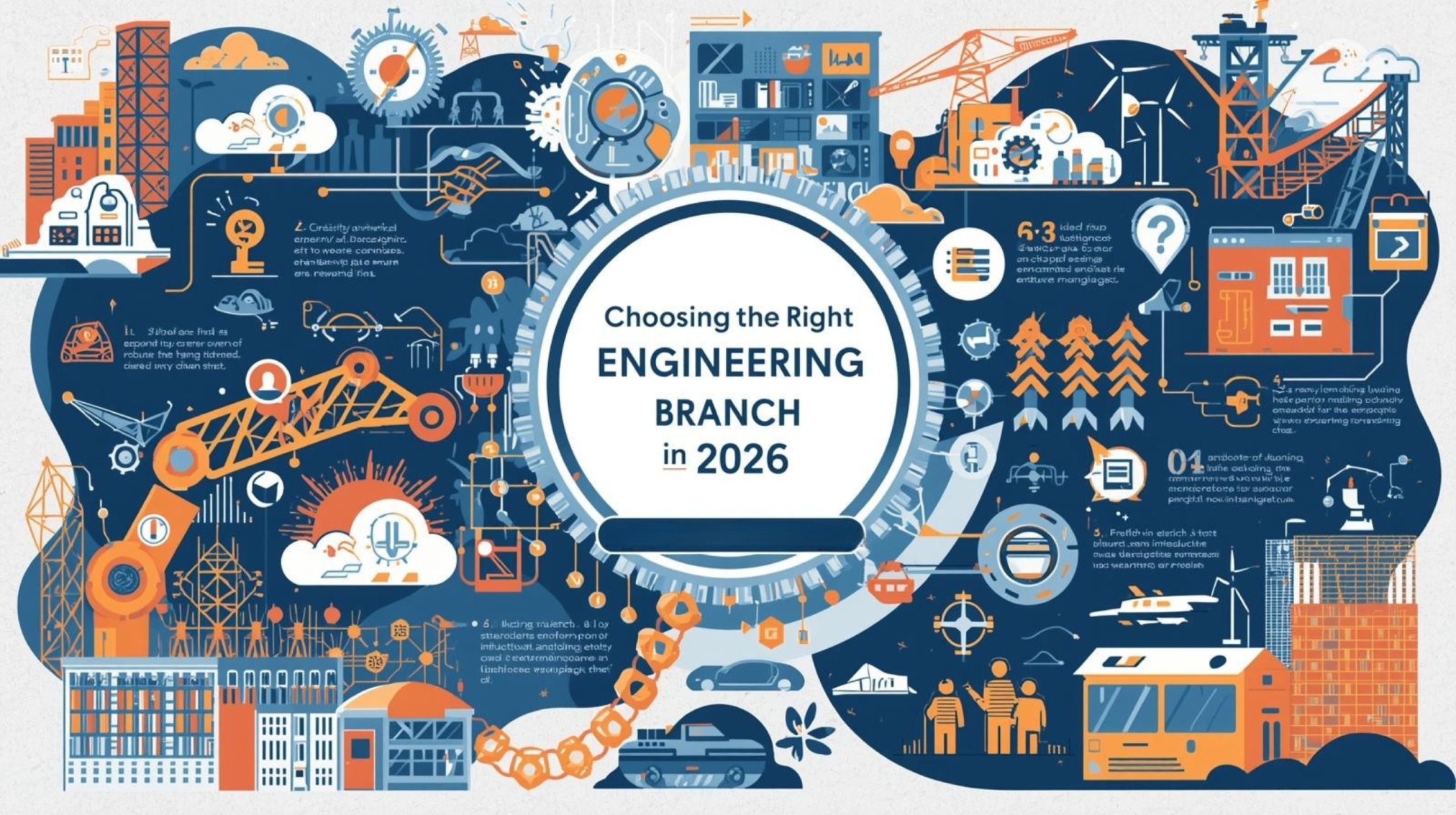
Choosing the right engineering branch is one of the most important decisions for a student after higher secondary education. In 2026, engineering education is evolving rapidly with the integration of Artificial Intelligence (AI), sustainability, automation, and interdisciplinary learning.
Selecting the right branch is not just about trends; it is about aligning your interests, aptitude, and long-term career goals.
1. Understand Your Interests and Strengths
Before looking at popular branches, ask yourself:
Your natural inclination matters more than temporary trends.
2. Overview of Major Engineering Branches in 2026
Computer Science & Engineering (CSE)
Best for students interested in programming, software development, AI, and data science.
Career opportunities include:
Why choose in 2026?
AI, automation, and digital transformation continue to drive strong demand.
Artificial Intelligence & Data Science
Best for analytical thinkers with strong math and coding skills.
Career opportunities include:
Why choose in 2026?
AI-driven industries are expanding across healthcare, finance, manufacturing, and education.
Electronics & Communication Engineering (ECE)
Best for students interested in electronics, embedded systems, and communication technologies.
Career opportunities include:
Why choose in 2026?
5G, IoT, robotics, and semiconductor industries are growing rapidly.
Mechanical Engineering
Best for students passionate about machines, automobiles, and design.
Career opportunities include:
Why choose in 2026?
Mechanical engineering remains evergreen with opportunities in automation, EVs, and Industry 4.0.
Civil Engineering
Best for students interested in construction, infrastructure, and planning.
Career opportunities include:
Why choose in 2026?
Smart cities and sustainable infrastructure are long-term priorities.
Electrical & Electronics Engineering (EEE)
Best for students interested in power systems, renewable energy, and electrical machines.
Career opportunities include:
Why choose in 2026?
Green energy, electric vehicles, and smart grids offer strong future potential.
3. Consider Future Trends, Not Just Current Popularity
When choosing a branch, look beyond today’s job market:
4. Evaluate the Institution and Facilities
The same branch can offer different outcomes depending on the institution. Consider
5. Think About Higher Studies and Global Opportunities
If youplan for
6. Avoid Common Mistakes
Final Advice
In 2026, the best engineering branch is the one that matches your passion, skills, and long-term vision. With continuous learning, internships, and certifications, every core engineering branch can lead to a successful and fulfilling career.